
Pilates can be surprisingly effective from a chair, especially for people managing desk hours, limited mobility, or rehab goals. With the right setup, pilates mini ball exercises can build core control, posture, and hip stability without needing a mat or getting down on the floor.
This guide shares five seated moves that suit Australian homes, offices, and community settings, using one small ball and a sturdy chair.
What do they need before starting these seated exercises?
They need a stable chair (no wheels), a pilates mini ball, and enough space to extend their arms without hitting a desk. They should sit tall with feet hip width apart, knees roughly over ankles, and shoulders relaxed.
If they feel pain, dizziness, or pins and needles, they should stop and consider advice from an Australian physiotherapist or an accredited Pilates professional.
How should they choose the right chair and ball at home or at work?
They should pick a firm chair with a flat seat and supportive back, like a dining chair or an office visitor chair. A standard 20–25 cm soft ball works well, and it should be slightly deflated so it compresses under gentle pressure.
For pilates mini ball exercises in an office, they should avoid swivel chairs, rolling chairs, or high stools that make balance harder.
Why do seated Pilates mini ball moves work so well?
They work because the ball gives immediate feedback, helping them recruit deep core and pelvic stabilisers without over-bracing. Seated positions also reduce load through wrists, knees, and ankles, which can suit people easing into movement.
Done consistently, pilates mini ball exercises can support better posture for long commutes, home office days, and time spent at a desk.
How can they do Exercise 1: Seated Inner Thigh Squeeze for pelvic and core control?
They can use this move to wake up the inner thighs and pelvic floor support while staying upright. It is simple, discreet, and ideal before meetings or after long sitting.
Setup and steps
- They sit tall near the front half of the chair.
- They place the ball between the knees, feet flat.
- They inhale to prepare, keeping ribs stacked over pelvis.
- As they exhale, they gently squeeze the ball for 3–5 seconds.
- They inhale to soften the squeeze without dropping posture.
Reps
- 8–12 squeezes, 1–2 rounds.
Form cues
- They keep shoulders down and avoid leaning back.
- They aim for a “firm hug” of the ball, not a maximal crush.
This is one of the most reliable pilates mini ball exercises for beginners who want quick, safe engagement.
How can they do Exercise 2: Seated March with Ball Squeeze to build hip stability?
They can combine a light ball squeeze with alternating leg lifts to challenge pelvic control. The goal is steady hips, not high knees.
Setup and steps
- They place the ball between the knees again and apply a gentle squeeze.
- They inhale, sitting tall with hands on hips or lightly on the chair sides.
- They exhale and lift one foot a few centimetres, keeping the pelvis level.
- They inhale and lower the foot with control.
- They repeat on the other side, keeping the squeeze consistent.
Reps
- 6–10 lifts per side.
Form cues
- They keep weight evenly through both sit bones.
- They lift only as high as they can without rocking.
For many people, this is where pilates mini ball exercises start to feel like true core training.
How can they do Exercise 3: Seated Spine Twist with Ball to improve posture and rotation?
They can use the ball as a guide to keep the ribs and shoulders aligned while rotating through the upper spine. This is helpful after hours of driving, studying, or laptop work.
Setup and steps
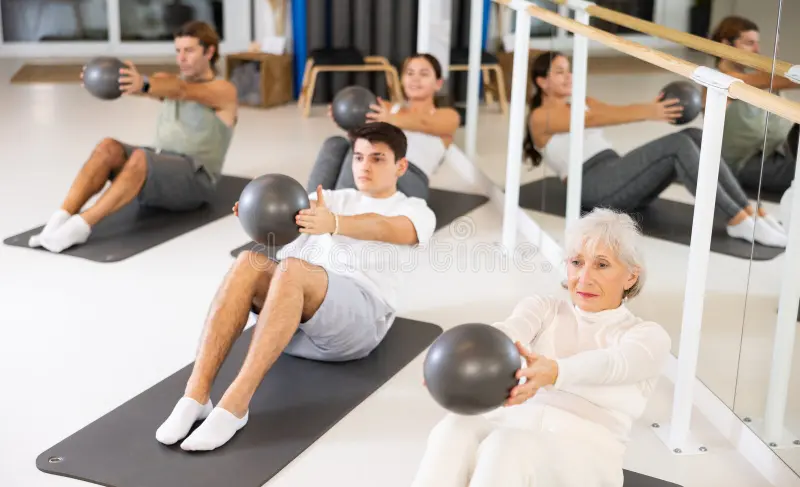
- They hold the ball at chest height with elbows soft.
- They inhale, lengthening through the crown of the head.
- They exhale and rotate to one side, keeping hips facing forward.
- They inhale back to centre.
- They repeat to the other side.
Reps
- 6–8 twists per side.
Form cues
- They avoid flaring ribs or arching the lower back.
- They think “tall then turn,” not “turn then slump.”
This is one of the seated pilates mini ball exercises that can quickly make their shoulders feel less tight.
See Also : Why a Pilates Squishy Ball Helps With Pelvic Floor Awareness
How can they do Exercise 4: Seated Overhead Press with Ball to strengthen the upper back?
They can strengthen postural muscles by pressing the ball up without shrugging. It targets shoulder control and the upper back, which often gets lazy in long sitting.
Setup and steps
- They hold the ball at chest height, palms on the sides.
- They inhale to prepare, softening the ribs.
- They exhale and press the ball overhead, stopping before the shoulders hike.
- They inhale and lower the ball back to chest height slowly.
Reps
- 8–12 presses.
Form cues
- They keep the neck long and shoulders away from ears.
- They keep the elbows slightly forward rather than flaring wide.
As a posture tool, pilates mini ball exercises like this can complement walking, swimming, or gentle strength work.
Other Resources : How to improve your posture
How can they do Exercise 5: Seated Roll-Back Prep with Ball for deep abdominal control?
They can use the ball to guide a small, controlled lean back that challenges the deep abs without collapsing the chest. It is not a full sit-up, and it should feel steady rather than strained.
Setup and steps
- They hold the ball in both hands at chest height or rest it lightly against the sternum.
- They inhale, sitting tall with feet grounded.
- They exhale and tip the pelvis back slightly, letting the spine curve into a small C-shape.
- They lean back a few centimetres, keeping shoulders relaxed.
- They inhale to pause, then exhale to return upright, stacking the spine.
Reps
- 6–10 controlled roll-backs.
Form cues
- They keep the movement small and smooth.
- They avoid gripping hip flexors by keeping feet heavy and the jaw relaxed.
This is a standout in pilates mini ball exercises for people who want core work without getting onto the floor.
How can they structure a 10-minute seated routine using these five moves?
They can do one round of all five exercises, focusing on slow breathing and clean form. A simple structure keeps it realistic for busy Australian days.
Example 10-minute flow
- Inner Thigh Squeeze: 10 reps
- Seated March with Squeeze: 8 per side
- Spine Twist with Ball: 6 per side
- Overhead Press with Ball: 10 reps
- Roll-Back Prep: 8 reps
If they have time, they can repeat the flow once more at lower reps with stricter control. This approach keeps pilates mini ball exercises consistent and easy to maintain.
What mistakes should they avoid to keep seated Pilates safe and effective?
They should avoid rushing, slumping, and over-squeezing the ball. Most results come from alignment and control, not effort that feels like straining.
Common fixable issues
- Shrugging shoulders: they soften the ribs and think “wide collarbones.”
- Holding breath: they match effort with an exhale.
- Rocking hips: they reduce range and slow down.
- Knees collapsing in or out: they keep feet grounded and track knees forward.
With better form, pilates mini ball exercises feel more targeted and less tiring.
Who are these seated exercises best suited to in Australia?
They are well suited to office workers, older Australians, people easing back after injury, and anyone who wants a simple movement break. They can also suit those in regional areas who want home-friendly options with minimal gear.
If they are pregnant, recently postnatal, or managing complex pain, they should consider tailored guidance from an Australian women’s health physio or a qualified Pilates clinician before progressing pilates mini ball exercises.
How can they progress these moves over time without leaving the chair?
They can progress by slowing the tempo, adding a longer exhale, increasing time under tension, or reducing hand support. Small progressions add up quickly when they practise two to four times per week.
Easy progression ideas
- Add a 2-second pause at the hardest part of each rep.
- Do two rounds instead of one.
- Keep posture taller by sitting closer to the chair edge.
Over a month, consistent pilates mini ball exercises can improve how they sit, stand, and move through everyday tasks.